For the umpteenth time, I’m back in Gran Canaria in winter. Last season I made several trips, and this one looks like I’ll be coming even more. When the wind lines up here, it delivers—and with the right spot and the right people, you end up with sessions worth documenting.
Wind, Control, and Decision-Making
This Reel captures one of those days: paraskating on a skateboard in strong wind, working the wing on the ground and using every gust to build speed, glide, and stay in clean control. It’s not just “messing around”—it’s a technical session that demands real skills: reading the wind, managing power, body position, braking, and most importantly, good judgment on when to push and when to stop.
Gran Canaria has something special for this kind of training: reliable winter wind, open areas, and the chance to practice in real conditions without improvising. This time I had the chance to ride and train alongside Christian Fernández del Valle—a local pilot with a strong technical approach. If you want to check out his work and background, visit christianfernandezdelvalle.com.
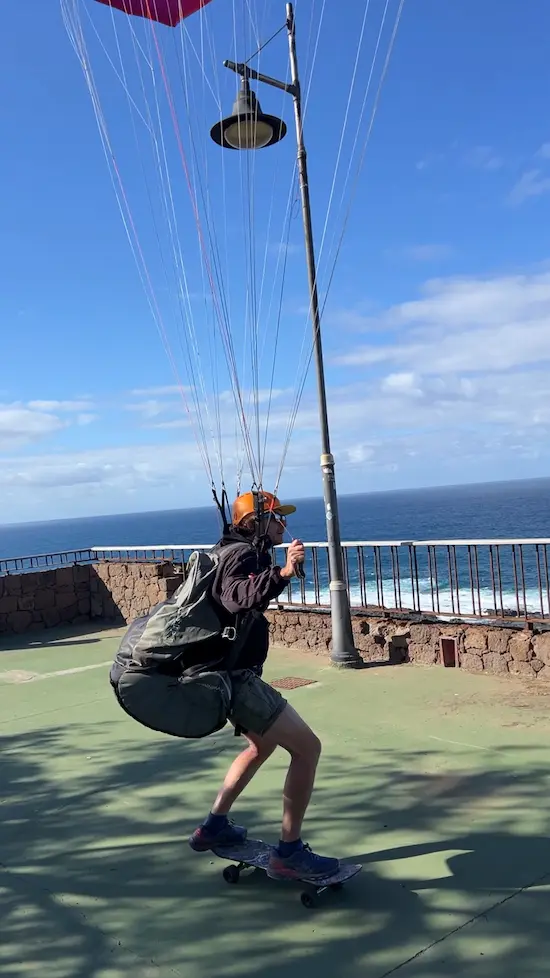
What I take from this session
- Strong wind doesn’t have to mean chaos if you keep your angles, power management, and priorities clear.
- Skateboard + wing is insanely fun, but it also raises the bar for anticipation and space management.
- Winter in Gran Canaria is still one of the best “training labs” for rapid progression.
If you enjoy this kind of session, I’ll be back again this winter with more: paraskating, ground control, and whatever happens when the wind gets serious.
Drop a comment: what do you want to see next—more technique, more spots, or more raw sessions?
Why Gran Canaria keeps working for this kind of training
What I appreciate most about winter sessions here is that they’re rarely “random.” The wind is often strong enough to be meaningful, but also consistent enough to actually practice—not just survive. That makes a huge difference if your goal is progression. You can repeat the same movement, test small adjustments, and build confidence through controlled reps instead of chasing perfect timing.
In strong wind, the biggest shift is mental: you stop thinking in terms of tricks and start thinking in terms of systems. Where is my safe exit? What’s my margin if the gust spikes? How clean is my power control when I transition? Small decisions—stance, edge control, hand position, how early you depower—become the difference between a smooth run and a messy correction.
That’s also why riding with someone like Christian Fernández del Valle matters. Local knowledge plus real flight discipline translates directly to better ground sessions: better spot choices, better lines, and better judgment on when to call it.